Our Services
Capital Imaging is the complete visual display and graphics solution for any creative project.Go beyond digital print services and take advantage of our other range of services.
Purpose
This policy outlines Capital Imaging’s file handling procedures to ensure efficient production, minimize errors, and protect the integrity of client projects.
Scope
This policy applies to all clients submitting artwork files for print and display production at Capital Imaging.
1. File Preflight & Technical Review
When Capital Imaging receives your artwork, our production team performs a technical preflight to ensure the file is suitable for high-quality production.
Common issues flagged during preflight include:
- Missing or unconverted fonts
- Absence of bleed or crop marks
- Unflattened images or layers
- Low-resolution or linked (non-embedded) assets
- Incorrect sizing or layout inconsistencies
Please note: Capital Imaging’s preflight process is strictly technical. We do not proofread submitted artwork or check for spelling, grammar, punctuation, or messaging accuracy. All content must be reviewed and approved by the client before submission.
2. Client Responsibility for Print-Ready Files
It is the client’s or designer’s responsibility to provide artwork that meets Capital Imaging’s specifications. While we will flag technical issues as a courtesy, the responsibility for correcting and finalizing files remains with the file creator.
Capital Imaging does not assume creative control or editorial responsibility for client-supplied content, messaging, layout choices, or design intent. Our role is to accurately produce what is submitted, once the file is cleared for print.
3. Policy on File Alterations
Capital Imaging will not alter client-supplied files without explicit written permission and prepayment.
If file correction or editing is requested and approved, standard production design rates will apply, and a revised proof must be approved with prepayment received prior to production.
This policy exists to:
- Protect against unapproved or unintended alterations
- Maintain the original creative intent of the designer
- Avoid responsibility for design decisions outside the scope of production
4. Timeline Implications
Delays in submitting production-ready files may affect project completion or scheduled deadlines. While Capital Imaging will make every effort to accommodate project timelines, production cannot begin until files are cleared for print.
Clients are encouraged to respond promptly to preflight feedback to avoid delays. Expedited production fees may apply if deadlines cannot be shifted.
5. Support
Capital Imaging is happy to provide limited file specification guidelines and basic technical advice before submission.
If requested, our team can assist with file preparation or correction—subject to written approval and billed at standard hourly rates.
6. Color Matching Disclaimer
Capital Imaging strives to deliver accurate and visually pleasing color results. However, exact color matching is not guaranteed.
Most client-submitted artwork is created using RGB color profiles, while all Capital Imaging digital presses print in CMYK. As a result, certain colors—especially bright, neon, or highly saturated tones—may shift during the conversion process. Additionally, colors viewed on personal monitors or mobile devices may differ significantly from printed output.
If color accuracy is critical to your project, we strongly recommend requesting a hard copy proof. Proofs are available upon request and billed in advance at standard rates, depending on project scope and timeline.
Contact
For questions about file requirements, artwork support, or production timelines, please contact:
Shawn Brokenshire
Artdepartment@capital-imaging.com
517-482-2292 ext. 21
Click the link below to download a copy of the files we accept.
Prototyping for signs, graphics, packaging, and composites involves creating early versions or models to test design concepts, materials, and functionality before final production. Each of these areas has its own specific requirements and processes, but the core idea remains the same: to validate and refine the design through iterative development.
Prototyping for Signs and Graphics:
- Concept Development:
- Sketching and Mockups: Initial designs are often sketched by hand or created using design software (e.g., Adobe Illustrator, CorelDRAW). These mockups help visualize the layout, typography, colors, and overall aesthetic.
- Digital Prototypes: Designers create digital prototypes that can be viewed on screens or printed on a smaller scale. This helps in assessing color accuracy, readability, and visual impact.
- Material Testing:
- Material Samples: Different materials (e.g., vinyl, acrylic, metal) are tested to see how they affect the appearance, durability, and performance of the sign or graphic.
- Print Tests: Small-scale prints or sections of the design are produced to test color consistency, resolution, and material compatibility.
- Scale Models:
- Scaled-down Versions: For larger signs, scaled-down prototypes can be created to assess proportions and design elements.
- Full-size Mockups: In some cases, full-size prototypes are produced using lower-cost materials or temporary mounting methods to test visibility and placement.
- Feedback and Iteration:
- Client Reviews: Prototypes are often reviewed by clients or stakeholders to gather feedback and make necessary adjustments.
- Iterative Refinement: Based on feedback, the design is refined, and new prototypes are created until the final design is approved.
Prototyping for Packaging:
- Design Mockups:
- 2D and 3D Renderings: Packaging designs are first created as 2D renderings or 3D models using software like Adobe Illustrator, Esko, or ArtiosCAD.
- Mock Packaging: Physical prototypes are made using paper, cardboard, or other materials to simulate the actual packaging.
- Material and Structure Testing:
- Material Prototypes: Different materials (e.g., paperboard, plastic, corrugated cardboard) are tested to see how they impact the strength, weight, and appearance of the packaging.
- Structural Integrity: Prototypes are subjected to tests for durability, load-bearing capacity, and environmental resistance (e.g., moisture, temperature).
- Print Testing:
- Color Proofing: Small batches of packaging prototypes are printed to test color accuracy, print quality, and alignment.
- Labeling and Finishing: Prototypes include all elements like labels, finishes (e.g., gloss, matte), and embellishments (e.g., embossing, foiling) to see how they look and feel.
- Consumer Testing:
- Focus Groups: Prototypes are presented to target consumers for feedback on aesthetics, functionality, and appeal.
- User Interaction: The usability of the packaging (e.g., opening, closing, handling) is tested to ensure it meets consumer expectations.
Prototyping for Composites:
- Material Selection:
- Material Testing: Different composite materials (e.g., carbon fiber, fiberglass, resin systems) are tested for properties like strength, flexibility, and weight.
- Sample Creation: Small-scale samples are created to evaluate the performance and characteristics of the chosen materials.
- Tooling and Molding:
- Tooling Prototypes: Molds and tools are prototyped to test the manufacturing process and ensure the final part meets specifications.
- Process Simulation: Techniques like vacuum forming, resin infusion, or autoclave curing are tested on prototypes to optimize the production process.
- Performance Testing:
- Structural Testing: Prototypes undergo testing for mechanical properties (e.g., tensile strength, impact resistance) to ensure they meet design requirements.
- Environmental Testing: Prototypes are exposed to conditions like UV light, moisture, and temperature extremes to assess durability and longevity.
- Refinement and Production:
- Iterative Design: Based on test results, the design and material composition are refined, and new prototypes are produced until the desired performance is achieved.
- Final Validation: A final prototype is created that closely matches the production model, allowing for any last-minute adjustments before full-scale manufacturing.
In each of these fields, prototyping serves to minimize risks, improve design outcomes, and ensure that the final product meets both functional and aesthetic criteria.
Scanning and converting hard copies of documents into electronic files makes them easy to edit, reproduce, and store. Our high-resolution, full-color scanning services can turn virtually any paper document into a TIFF, PDF, JPG, or any other file type you can think of.
When you choose on-demand print with Capital Imaging, we store your print-ready files digitally so you can easily restock your supply at a moment’s notice.
From initial consultation through final installation, our project management services will ensure your project goes smoothly and stays on budget. We’ll take care of all the organization and coordination so you can sit back, relax, and enjoy your final project: all on your schedule.
Before getting sent to the presses, our prepress technicians thoroughly inspect your file to ensure it yields the best possible print outcome. With our expert staff, you can rest assured that we will point out any color inconsistencies, typos, or any other errors that could compromise the quality of your print. We happily provide physical proofs of some prints so you can see the finished result for yourself before final production.
Our design, printing, and finishing services wouldn’t do you any good if we didn’t promise to get your project where it needs to go on time. We can have any of our products in your hands as early as the next day, but whatever your time constraint, Capital Imaging has a shipping solution to fit your needs.
- Shipping options:
- FedEx
- UPS
- U.S. Postal
- Freight Carrier
- Capital Imaging Courier
We make sure your custom graphics get installed properly, whether it be by our team or another installer. (Capital Imaging does not perform electrical sign work. We have the responsibility to comply with the licensing and regulation code requirements regarding electrical work and sign installation in city, county, and state.)
Incorporating professional-level graphic design into your next sales and marketing campaign will elevate your brand’s message and give you a competitive edge. From your initial project consultation through completion, our graphic designers will work with you on an individual basis to bring your unique creative vision to life.
Is direct mail part of your next marketing campaign? We will design, print, and even distribute your materials! Send us your mailing list and we will merge the addresses to envelopes or self-mailers, sort and bundle them, and drop them off at the post office.
Don’t have a mailing list? We can help you navigate the post office’s Every Door Direct Mail (EDDM) services. With this tool, you can target specific mail routes based on location, demographics, and more.
Learn More About EDDM Services
From consultation and design to production and distribution, your next direct mail campaign is guaranteed to run smoothly. Read more about our sales & marketing communications products here.
There are a lot of details to consider when ordering prints or acquiring graphic design services. With our consultation services at your full disposal throughout the entire course of your project, you never have to hesitate to ask questions. If you wish to involve our graphic design services, we offer a complimentary consultation to discuss your project objectives and gather more information to create an accurate initial project quote.
Keep it clean, simple and cost effective with stapled binding. Quality stapling is a strong and cost-efficient solution for large quantities of documents such as reports, newsletters, or handouts that don’t need full-spine binding. Documents are typically stapled in the upper left corner or two or three times along the left edge of the document.
Saddle Stitch Binding, sometimes called booklet making, is a great finishing option for your documents. In addition, Saddle-Stitched binding is among the easiest and most common methods to finish booklets. The Saddle Stitch method is most effective for binding booklets and publications with 64 pages or less. Books and other documents that are commonly Saddle Stitched include programs, wall calendars, booklets, newsletters, pamphlets, direct mailers, comic books, thinner magazines and catalogs.
Why is it called Saddle Stitching? Well, actually, we’re just stapling sheets of paper together but in the printing industry we call that Stitching. However, to staple or stitch the sheets together, we collate the sheets over a Saddle-like device during the stapling/stitching process, hence the name Saddle Stitching.
3-Ring Binding provides flexibility and a professional look to impress your audience. Available in various ring sizes, styles, and colors, and storing anywhere from a few sheets to more than 1000. 3-Ring Binders also allow for inserting covers and separating pages with tabs. 3-ring binders are great for training manuals, workshops and presentations where users might need to add more materials on their own. Need to be able to add or take pages in and out of your document? A 3-ring binder may be exactly what you need.
Send us your 3-ring binders and your document files and we’ll print the text pages, tabs, and covers and take care of assembling and kitting the documents for you.
Comb binding – sometimes referred to as cerlox or surelox binding, plastic comb, or spiral binding is one of many ways to bind pages together into a book or manual. Comb Binding is a sleek way to finish your documents and offers an attractive, high-quality option for many document types such as business plans, corporate minutes, financial statements, user guides, white papers, research papers, and instruction manuals.
With this bind, the book lies flat but cannot be opened 360 degrees. For a book that can be opened such that the covers touch, a spine that does not have an obstructive body, such as a coil binding, is a better option.
Also known as twin-loop, double wire, duo-wire, or wire-o binding wires. Twin Loop Wire Binding is a great way to secure and finish your documents with fashion. It’s ideal for presentations, reports and any other document that needs a more sophisticated appearance. Polished and professional, you’ll be proud of the impressive finish twin loop wire binding gives your document. The twin loops are available in many colors.
Coil binding, also known as spiral binding, is a commonly used book binding style and can be used across multiple document types. Documents bound with coil bindings can open flat on a desk or table and offer 360 degree rotation for easy note taking. This binding style is durable and is often used for documents that gets heavy use. The coils are available in many colors.
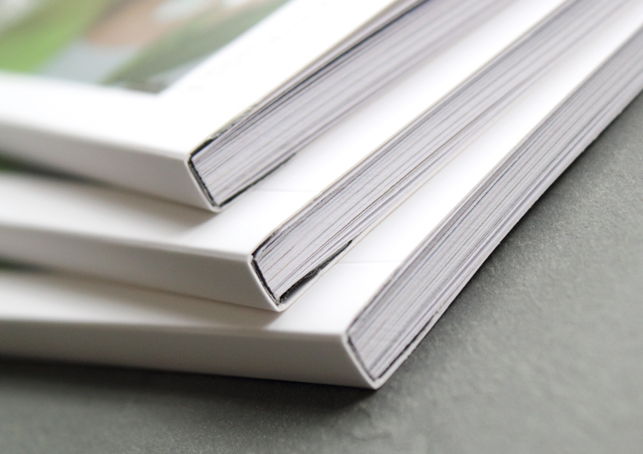
Perfect Binding is a widely popular soft-cover book binding method because of its professional appearance. Perfect binding is commonly used for books, annual and corporate reports, manuals, catalogs and thicker product brochures.
The primary benefits of Perfect Bound books are that they have a very high visual appeal and professional appearance. They’re economical to produce, can accommodate hundreds of pages up to one and a half inches thick, and they stack and display extremely well. Also, in most cases, the square spinal edge formed by the perfect binding method allows for the book’s title or other information to be printed on the spine. Add UV coating to the cover for a high gloss.
Capital Imaging provides shrink wrapping services adding a professional touch to finished documents and art work.
Shrink wrapping provides a tight protective seal, perfect for some kinds of artwork and documents. Shrink wrapping can protect a work of art, while allowing the customer to view and handle it.
With our environmentally friendly and instant drying time process, our High Gloss UV coating will make your printed piece instantly noticed and is perfect for products such as postcards, hand-outs, presentation folders, business cards, catalogs or any product that will benefit from a dramatic, rich and glossy appearance.
Additional benefits are enhanced abrasion resistance as well as higher visual clarity.
When you need one, two, three, or four corners of a printed sheet or card rounded, just ask. Rounded corners reduce the wear and tear of page corners and give your job a professional touch. Rounded corners look great on business cards, brochures, booklets or catalogs!
Perfectly bound note pads, NCR forms, and order forms. Custom pads can be ordered on your choice of paper at any size and any number of sheets.
Whether you choose Foamcor, Gator Board, Sentra, or Mat board, your images, prints, signs, and posters will look their best when professionally mounted at Capital Imaging. We offer professionally mounted prints in a variety of sizes up to 4 x 8 feet.
We have you covered with all the folding options. Half, Letter, Z-Fold, Accordion, Barrel, Gate, and Parallel folds. Our precision folds are sharp giving the finished piece a professional touch.
Our computerized digital paper cutter uses high-pressure hydraulic clamps to hold the paper in place while a razor-sharp steel blade makes precise cuts.
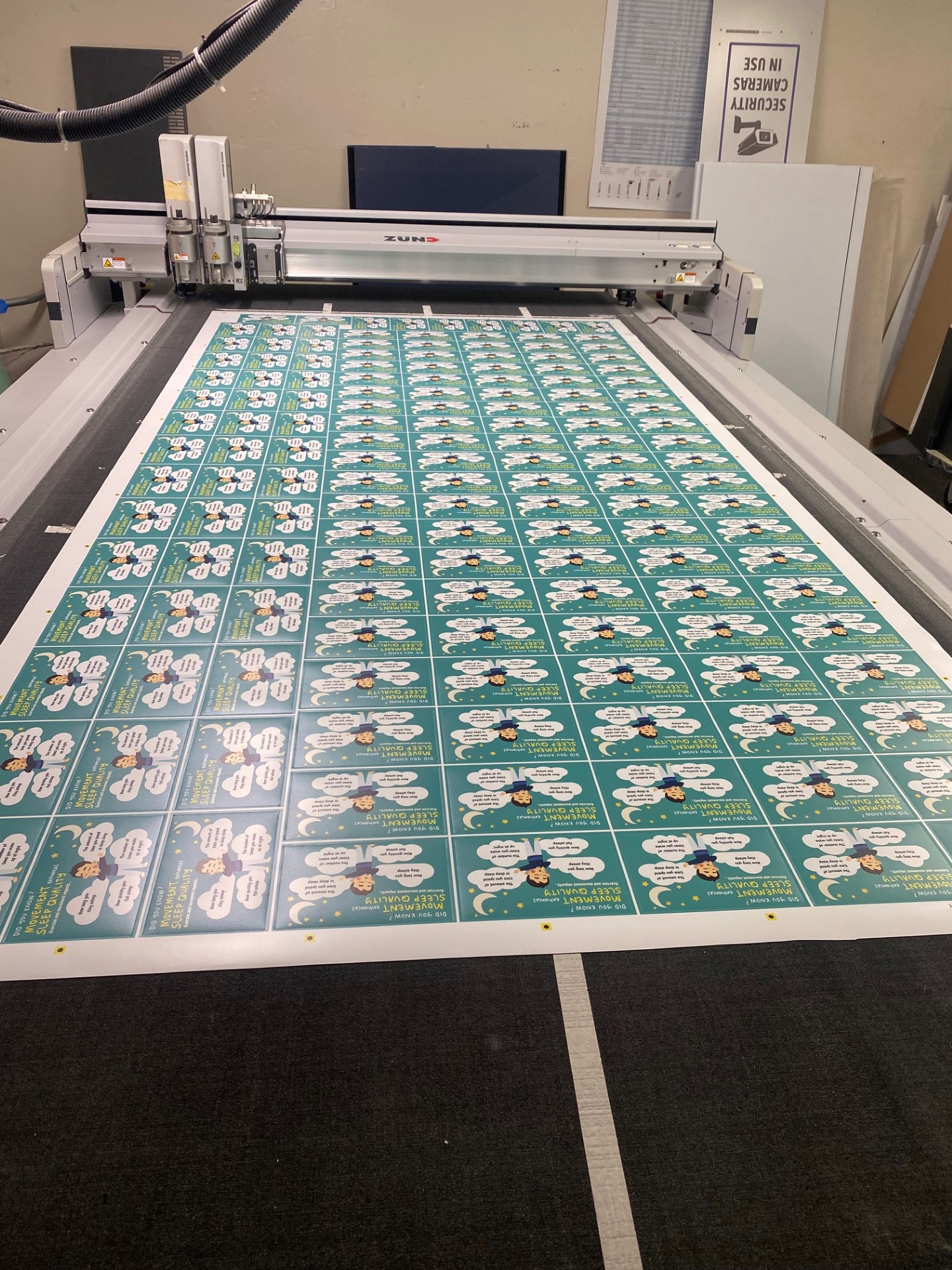
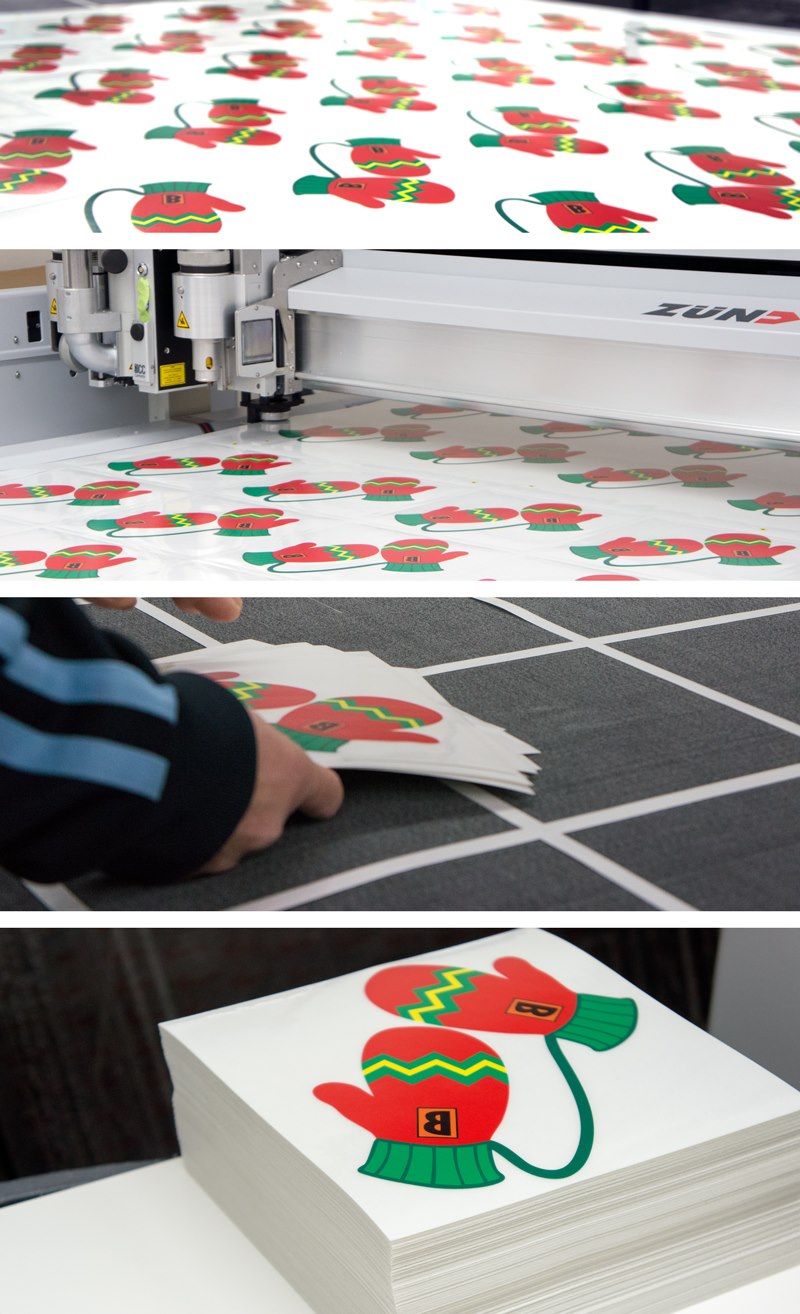
Custom cutting to any shape and size. Set your marketing collateral a ‘Cut’ above the rest with custom cutting to any shape and size. Our digital die cutter adds a custom touch to services such as Packaging, Point of Purchase, Signage and Trade Show Displays. Great for corrugated displays too!
Our custom digital router provides routing and cutting technology to your one-of-a-kind rigid substrates for signage, cardboard packaging or display projects.
Prepare your printed materials for seamless organization and professional presentation with Capital Imaging’s hole punching and drilling services. Whether you need single-hole, multi-hole, or custom drilling patterns for binders, manuals, catalogs, training materials, or presentation documents, our precision finishing equipment ensures consistent placement and clean results. From small document sets to large production runs, we help create ready-to-use materials that are easy to store, distribute, and reference while maintaining a polished, professional appearance.
Lamination and Encapsulation are two different ways of applying lamination to a document, poster, or graphic.
When an item is completely encased (both sides) in lamination such that the lamination goes off the edge and forms a seal the document has been encapsulated and is water tight. If the item is laminated on one side or both and the lamination is flush with the edge of the document it is laminated. Lamination is not water tight because moisture can get into the paper through the unsealed edges.
From laminates to specialty adhesives and coatings, Capital Imaging carries a line of laminating supplies that leads the industry in quality, performance, and innovation.
- Dry-Erase
- Scratch and scuff resistant
- Gloss
- Non-gloss
This particular option is widely regarded as top-of-the-line, and for good reason. It can be cut using a variety of different tools, including die cut, drag knife, and router, which makes it an incredibly versatile option for a wide range of applications. Additionally, it’s built to last for up to a decade, which is a testament to its durability and quality. One of the other great things about the UltraBoard Classic is that it’s available in a range of different colors and thicknesses. This makes it incredibly easy to find the perfect option to suit your specific needs and requirements. Furthermore, if you’re interested in exploring other UltraBoard products, there are plenty of options available that each offer their own unique advantages and features. Overall, if you’re in the market for a high-quality foam board that can deliver exceptional performance and durability, the UltraBoard Classic is definitely worth considering.
UltraBoard Classic consists of a polystyrene foam core board between two rigid sheets of polystyrene.
Panel Thicknesses 3/16″, 1/2″, 3/4″, 1″
CORAFOAM HDU is a high-density polyurethane sheet that is versatile and resistant to weather, solvents, and moisture. It’s commonly used in sign making, modeling, and aerospace industries. With a consistent texture and a wide range of densities, it’s easy to finish, carve, or machine. The most popular densities for sign making are 15lb and 20lb. 15lb is recommended for indoor and outdoor signage, while 20lb is a great alternative for projects where strength or weather is a major concern, or as a potential option to reduce priming/finishing time.
Create bold, dimensional branding with custom sign foam solutions from Capital Imaging. Sign foam is a lightweight, durable material ideal for interior and exterior signage, architectural lettering, monument signs, wayfinding systems, and corporate branding displays. Precision-cut and fabricated to your specifications, foam signage offers the appearance of carved or dimensional signs while remaining cost-effective and versatile. Available in a variety of thicknesses, finishes, and paint options, sign foam can be customized to match your brand identity and withstand the demands of commercial, healthcare, educational, and corporate environments. Whether you’re looking to enhance a lobby, campus, facility, or storefront, our custom foam signage delivers professional visual impact that lasts.
Foamed PVC sheets and sign blanks offer a smooth and uniform surface, great ink adhesion, and consistency. Our premium PVC sign board comes in various sizes, thicknesses, and colors, even for outdoor use. The iONPVC boards are also available for cost-sensitive projects. These materials are perfect for displays, signs, interior decoration, and exhibition boards. Choose PVC Premium for vibrant colors, easy fabrication, and excellent ink adhesion. Foamed PVC sheets and sign blanks are versatile, durable, and offer excellent performance.
Get our eco-friendly Premium Poster Paper for all your printing needs. It’s perfect for digital printing with its semi-matte finish and produces bright colors, sharp graphics, and clear text. Plus, it’s durable for indoor and outdoor use at an affordable price of 9 mil.
We take great pride in our selection of posters that can be utilized for a wide range of purposes including showcasing photographs, promoting events, and advertising. Our posters boast a diverse array of sizes that can be tailored to meet your unique specifications. Depending on the intended use, you can pick from a thickness range of 5 mil to 10 mil. Popular sizes such as 18” x 24”, 24” x 36”, and 27” x 40” are readily available, but we are more than happy to print posters in any dimension required.
At Capital Imaging, we provide high-quality Polystyrene sheets that are perfect for all your signage needs. Our sheets come in three options – Double White, Dead White, and Triple White – each with different finishes and thicknesses. These sheets are ideal for digital printing and short-term outdoor use. You can choose the perfect thickness for your project with options ranging from .02 to .06. We offer cost-effective solutions and guarantee that our sheets will prevent any bleed-through.
These polycarbonate substrates are perfect for jobs that require a flexible or formable material. They are high-resistance, lightweight, and more durable than acrylic. Even at low temperatures, they maintain their impact strength. They are also weather-resistant and flexible, making them easy to shape. With high clarity and light transmission, they are virtually unbreakable. They are available in clear or sign white and can be used for backlit or illuminated signage, channel letters, LED sign faces, digital or screen printed signs, P-O-P displays, exhibits, literature holders, merchandise racks, and stands. They are versatile and machinable, making them the ideal choice for a wide range of applications.
Our glossy or matte finishes and precise edge-to-edge printing are unbeatable. Our posters are perfect for showcasing photos, advertising, event notifications, and more. We can customize the size based on your specific needs, with a thickness range of 5 mil to 10 mil, depending on the intended use. Although our popular sizes include 18” x 24”, 24” x 36”, and 27” x 40”, we can print posters in almost any dimension you require. You can trust us to provide you with the finest posters to meet your needs.
This poster paper is designed for outdoor use and has a bright white finish. It is certified for use with latex ink and has superior scratch resistance. Additionally, it can be folded without cracking and has high degree of wet strength.
Matte posters have a unique quality of enhancing depth and detail without any glare. They are perfect for places with natural or overhead lighting and can be framed under glass. Although they lack shine, they still offer a great visual experience.
If you want to create vibrant and rich colors, gloss posters are a great choice. They have a shiny finish that leaves a smooth surface, which makes the details in your design pop. Gloss posters are perfect for any setting, but they work particularly well in low-light situations, such as indoor environments.
Core Foam Sign Board Sheets, HDU Sign Foam Boards & More.
Capital Imaging is your one-stop-shop for high-quality foam sign boards and HDU sign foam. Our wide range of options includes affordable clay-coated paper with foam centers and durable foam core signs with poly-coated and styrene surfaces. We offer most of our substrates in 4×8 foam core boards, with some available in various sizes. You can trust in our unparalleled selection and service to meet your needs.
Coroplast is a fluted polypropylene substrate that is easy to cut, route, die-cut, and finish. It’s an economical option for digital and screen print applications, and it’s recyclable. Coroplast is ideal for a variety of applications, including point-of-purchase displays, trade shows and exhibits, construction signage, real estate and political signs, in-store displays, transit advertising, and pole signs.
We offer a range of colors, including white, black, opaque, light blue, dark blue, natural, silver, ivory, orange, green, red, yellow, and brown.
Looking for a durable, lightweight alternative to traditional sign materials like MDO, wood, and aluminum? Consider aluminum composite sign panels (ACP). These panels consist of two pre-painted sheets of aluminum bonded to a solid polyethylene core, making them versatile and easy to fabricate into a variety of shapes and sizes. They also offer a low thermal conductivity, allowing for quick cool-down times. ACP panels can be used for many different applications, including cabinet light boxes, channel letters, yard signs, wayfinding signs, site signs, dimensional signage, and partitions. Plus, we offer a range of different ACP products to suit your specific needs, from digitally printable options to decorative finishes for sophisticated interior applications. Choose from a variety of thicknesses, skin gauges, colors, and sizes to find the perfect ACP product for your project.
At Capital Imaging, we offer a wide variety of acrylic sheets, including cast, extruded, day/night, and matte finish options. Our selection includes various colors, finishes, and thicknesses from top brands like ACRYLITE and Chemcast, so you can find the perfect acrylic for your project.
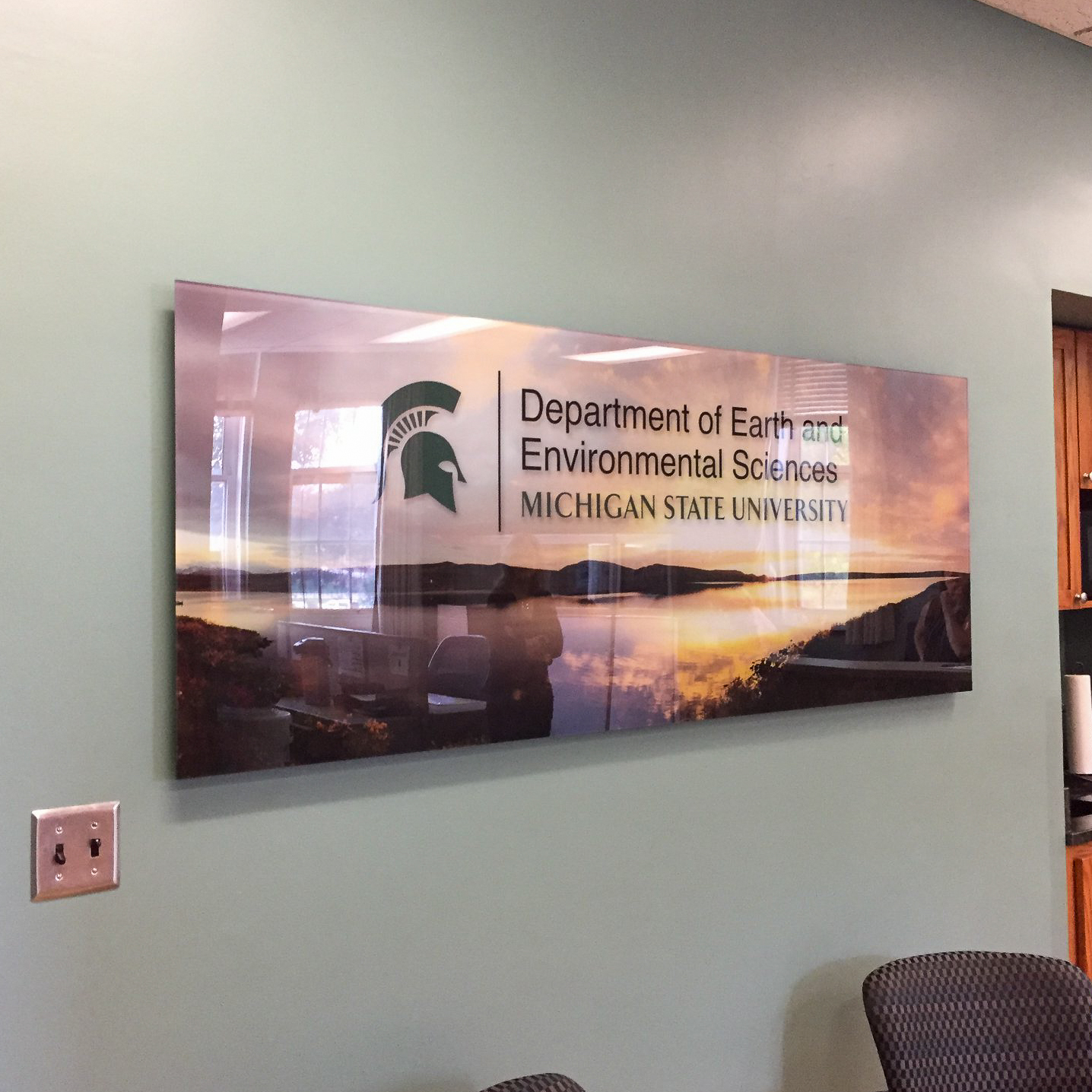
One of our most popular options is ACRYLITE® Extruded Acrylic – Digital Print, which is a 4’x8′ clear acrylic panel. This sheet has excellent adhesion properties for UV and Latex ink, making it perfect for flatbed printing. The optical clarity ensures color accuracy and vividness in every print, and the crystal-clear edge allows for side exposure. You can choose between clear and white options.
Are you tired of paying for storage and fulfillment services? Frustrated by reprinting costly marketing materials due to content changes, employee turnover, or damage from poor storage conditions? Capital Imaging offers flexible, on-demand printing with trusted, high-quality results. With our on-demand service, we store your print-ready files digitally, allowing you to restock quickly and easily whenever you need.